


Oil Pump 12V 100W, Oil Extractor Pump for DIY Engine Oil Change
Oil Pump 12V 100W, Oil Extractor Pump for DIY Engine Oil Change
Couldn't load pickup availability
-
Ordered
- - -
Order Ready
- - -
Delivered

Oil Pump 12V 100W, Oil Extractor Pump for DIY Engine Oil Change
Pull Old Oil Out From The Top.
Keep The Job Cleaner.
This compact 12V electric extractor draws compatible warm oil through the dipstick tube, giving DIY maintenance users another way to remove fluid without beginning with a drain-pan setup underneath the vehicle.

Oil On The Floor.
There’s Another Way To Start The Job.
When the vehicle supports topside extraction, pulling used oil through the dipstick tube can simplify the messy first stage of a DIY oil change.

Work From The Engine Bay
When Your Vehicle Allows It.
Feed the narrow inlet tube into a suitable dipstick tube, route the outlet into a waste-oil container and let the 12V pump move the old oil out from above.
-
↑
Keep more of the job at working height.
For compatible vehicles, extraction can begin from the engine bay instead of underneath the chassis. -
🛢
Direct used oil into your own collection container.
The outlet hose gives you a controlled path from pump to waste-oil bottle or pan. -
🔧
Useful for DIY maintenance routines.
Keep the extractor ready for compatible cars, motorcycles and small equipment.

Know What Goes Through It.
And What Absolutely Does Not.
The pump is intended for compatible lubricating fluids such as engine oil, gear oil and transmission-type fluids within the product's operating range.

100W Motor.
Up To Approx. 4 L/Min.
The 12V DC motor is designed to move warmed compatible oil at a useful DIY service rate, with actual flow changing significantly with fluid viscosity and temperature.
-
12V
Runs from a 12V DC source.
Battery clamps make it practical for automotive maintenance without a wall outlet beside the vehicle. -
100
100W rated motor.
Designed for fluid-transfer work within the pump's specified operating limits. -
↗
Flow depends on the oil.
Thin, warmed oil moves faster than cold, high-viscosity oil.

Inlet From The Engine.
Outlet To The Waste Container.
Dedicated hose connections create a straightforward transfer path so you can see where the old oil is coming from and where it is going.

Pump, Tubes & Connectors
In One Setup.
The kit includes multiple tube diameters so you have a narrower inlet option for dipstick-tube access plus larger tubing for the transfer path.
-
6
6 mm × 800 mm inlet tube.
A narrow option for compatible dipstick-tube access. -
8
8 mm × 1000 mm inlet tube.
Gives another inlet size for compatible service points. -
10
10 mm × 1000 mm outlet tube.
Routes extracted oil toward your waste-fluid container.

Temperature Changes
The Extraction Speed.
Oil becomes harder to pump as viscosity increases. Bringing the engine oil to a mildly warm service temperature before extraction can help it flow more readily through the narrow tubing.

A Straightforward
Five-Step Setup.
Prepare The Pump
Install the required connectors and tubing according to the supplied setup instructions.
Secure The Hoses
Confirm the inlet and outlet tubes are connected on the correct sides and secured before operation.
Connect To 12V Power
Attach red to the positive battery terminal and black to the negative terminal with the pump switched off.
Position Both Tubes
Insert the inlet into the suitable oil-access point and place the outlet securely into an approved waste-oil container.
Switch On & Monitor
Start the pump and watch the fluid flow, connections and collection container throughout the extraction.
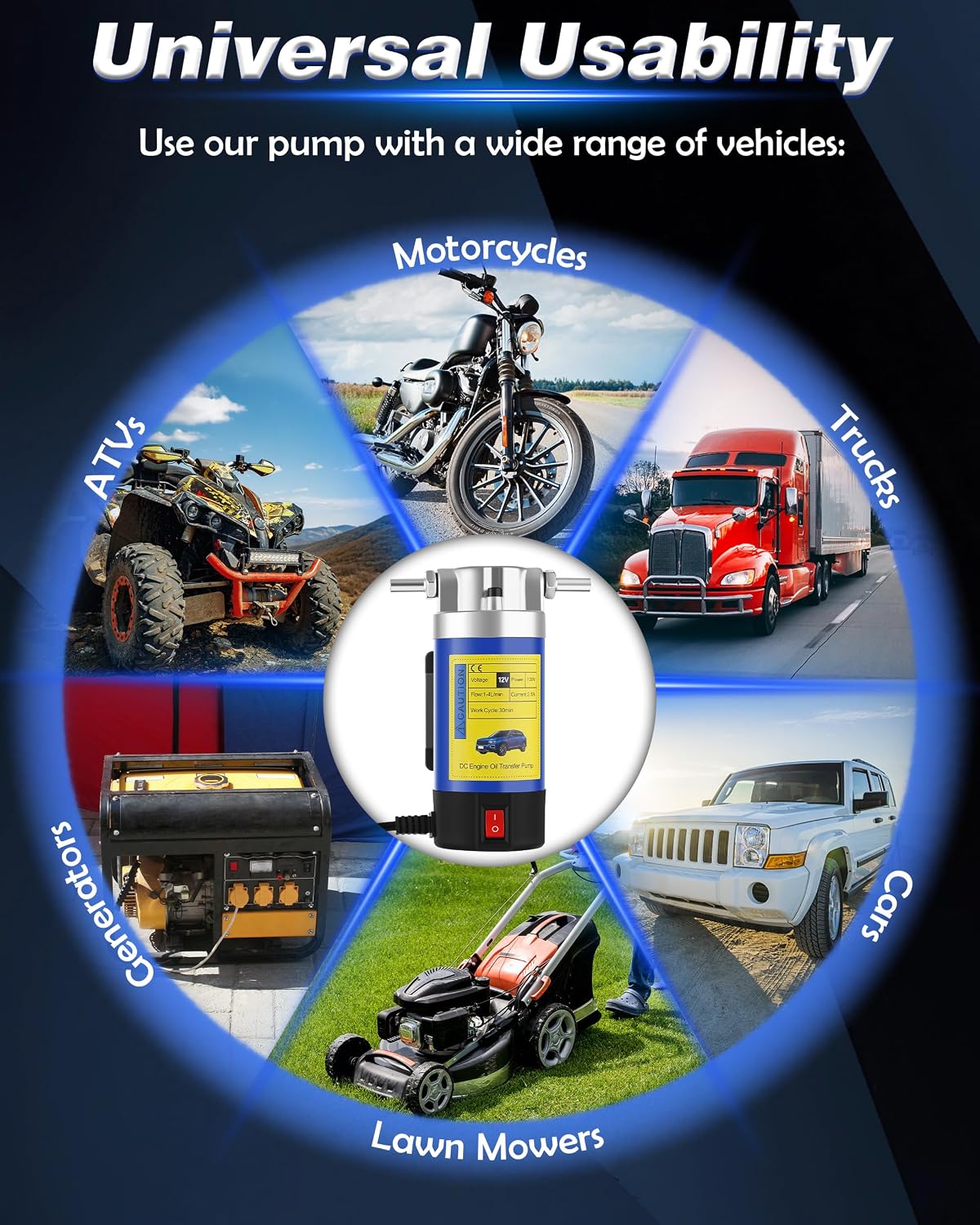
One Pump For More
Of The Equipment You Maintain.
Use it on compatible oil-service systems where topside or hose-access extraction is appropriate and the fluid falls within the pump's intended use.
Cars
Motorcycles
Trucks
ATVs
Lawn Mowers
Generators
Marine Equipment
DIY Maintenance
Compatibility depends on the machine's service design, access points, fluid type and manufacturer instructions.
Make The Messy Part
Of DIY Maintenance Simpler.
-
↑
Extract compatible oil from above.
For supported vehicles, the dipstick-tube method can reduce the need to begin beneath the car. -
12V
Power it from a 12V automotive source.
Battery clamps make the pump practical in garages, driveways and service areas. -
100
Use a 100W electric motor instead of manual pumping.
Let the motor move the fluid while you monitor the transfer. -
👀
See the oil moving through the tubing.
Transparent hoses give you a clear visual of the transfer process. -
🔧
Keep one extractor for multiple compatible machines.
Useful across automotive, lawn and small-equipment maintenance when service access allows.
Product Details.
| Product Type | Electric Oil Extractor / Transfer Pump |
| Rated Voltage | 12V DC |
| Rated Power | 100W |
| Motor Speed | Approx. 2800 RPM |
| Flow Rate | Approx. 1–4 L/min / Up To About 4.2 qt/min Depending On Fluid |
| Duty Cycle | Up To Approx. 30 Minutes Per Operating Cycle |
| Pump Body | Aluminum-Alloy Housing |
| Power Connection | 12V Battery Clamps |
| Inlet Tube 1 | Approx. 6 × 800 mm |
| Inlet Tube 2 | Approx. 8 × 1000 mm |
| Outlet Tube | Approx. 10 × 1000 mm |
| Suitable Fluids | Compatible Engine Oil • Gear Oil • Lubricating Oil • Transmission-Type Fluid |
| Not For | Gasoline • Diesel • Water • Flammable Fuels |
| Package Includes | Pump • Inlet Tubes • Outlet Tube • Push Connectors • Screws • Outlet Clamp |
| Great For | DIY Oil Changes • Cars • Motorcycles • Lawn Equipment • Generators • Compatible Machinery |
Flow rate varies with fluid viscosity, temperature, hose position and system design. Always follow the vehicle or equipment manufacturer's maintenance procedure. Some engines are not suitable for complete topside oil extraction, and conventional drain-plug servicing may still be required.
Oil Extractor FAQ.
Can this replace removing the drain plug on every vehicle?
No. Topside extraction depends on engine design and dipstick-tube access. Some vehicles can be serviced effectively from above, while others still require conventional draining. Follow the vehicle manufacturer's service procedure.
What power source does it use?
The pump is rated for 12V DC and connects using battery-style clamps. Connect the clamps with the pump switched off and observe correct polarity.
Should the engine oil be warm?
Mildly warmed oil generally flows more easily than cold oil. The product guidance suggests warming the engine briefly before extraction. Avoid dangerously hot oil and hot engine surfaces.
Can I pump gasoline or diesel?
No. Do not use the pump for gasoline, diesel or other flammable fuels.
Can I use it for water?
No. The product is intended for compatible oil-based automotive and equipment fluids, not water transfer.
Why is the oil moving slowly?
Cold or high-viscosity oil moves more slowly through narrow tubing. Flow also depends on hose placement, oil grade, temperature and the machine being serviced.
Can I leave the pump running continuously?
The stated duty cycle is approximately 30 minutes. Stay with the pump while it operates and do not exceed the product's operating limits.
What vehicles can I use it on?
It may be useful with compatible cars, motorcycles, ATVs, lawn mowers, generators, trucks and other equipment where oil extraction through an accessible service point is appropriate.
Connect The Pump.
Route The Hoses.
Pull The Old Oil Out.
Add a compact 12V extractor to your garage setup and give compatible oil changes a cleaner, more convenient starting point.
ADD IT TO YOUR GARAGE ↑


