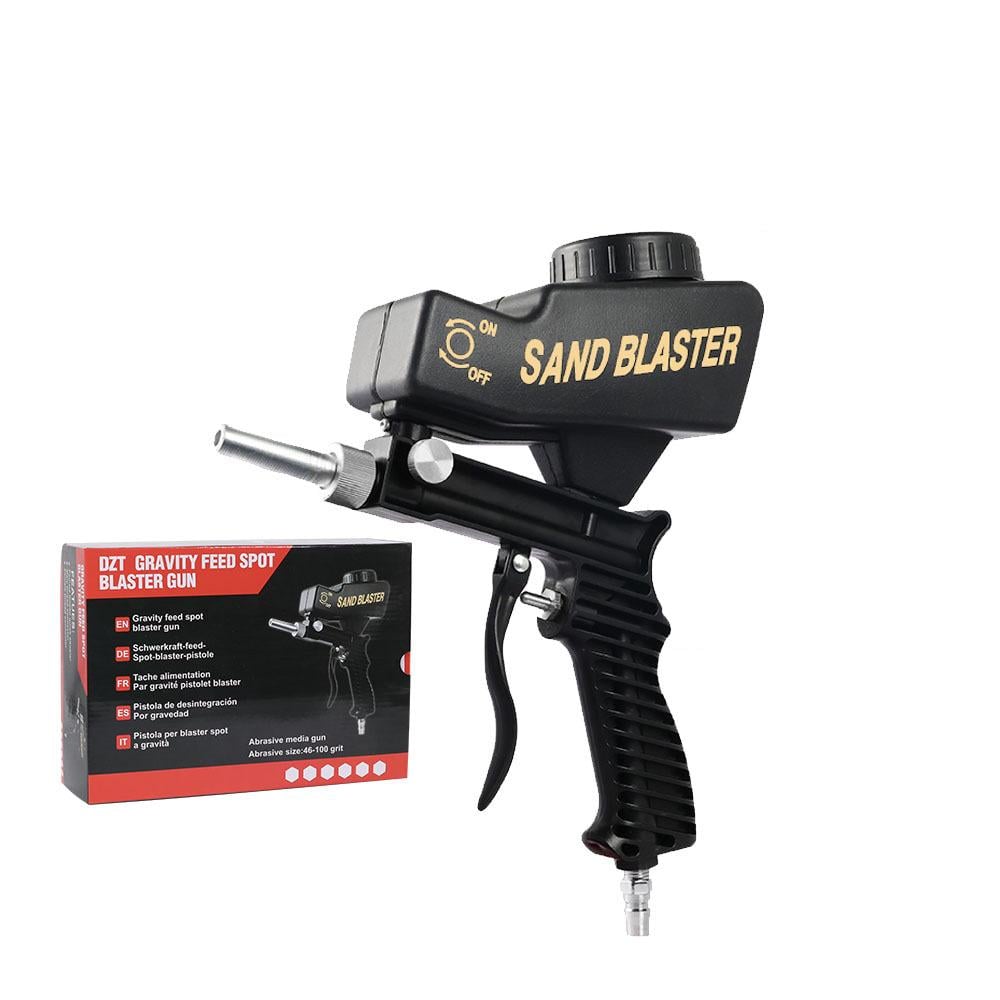
Rust Blasting Device Adjustable Blasting Machine
Rust Blasting Device Adjustable Blasting Machine


BUNDLE & SAVE
Couldn't load pickup availability
-
Ordered
- - -
Order Ready
- - -
Delivered

Rust Blasting Device Adjustable Blasting Machine

Blast Away Rust, Paint & Surface Buildup
Restore Metal Surfaces Without Hours of Hand Scrubbing
A portable gravity-feed pneumatic sandblasting tool designed for rust removal, paint stripping, surface preparation and detailed restoration work.

🛠️ Helps remove rust, old paint, scale and surface buildup
🎛️ Adjustable blasting control for different jobs
🪶 Portable handheld design for detailed work
🚗 Ideal for automotive parts and body-repair preparation
🔩 Suitable for workshops, restoration and DIY projects
Wire Brushes and Sandpaper Can Take Forever
Rust, chipped paint and oxidation often settle into corners, curves, seams and textured metal surfaces that are difficult to clean by hand.
Manual sanding can be slow, uneven and exhausting—especially when preparing multiple parts for repainting, coating or repair.

Compressed-Air Cleaning Power
Direct Abrasive Media Exactly Where It Is Needed
Connect the tool to a compatible air compressor, fill the upper reservoir with suitable dry blasting media and direct the nozzle toward the work surface for controlled cleaning and preparation.

Simple Gravity-Feed Design
Keep the Blasting Media Close to the Nozzle
The top-mounted reservoir allows dry abrasive media to feed downward into the airstream, creating a compact setup for spot repair, small parts and detailed surface work.
🎛️ Adjust the Blasting Output for the Job
Use the control valve to regulate media flow according to the surface, blasting material and level of buildup you need to remove.

Built for Detailed Surface Preparation
🔩 Reach Corners and Irregular Shapes
The handheld nozzle is easier to aim at brackets, wheel parts, seams, edges and small metal components than large stationary equipment.
🎨 Prepare Surfaces for Repainting
Remove loose rust, old coatings and surface contamination before applying primer, paint or protective finishes.
🧰 Handle Small Restoration Jobs In-House
Clean hardware, tools, automotive components and workshop parts without relying only on manual sanding.

One Tool for Multiple Restoration Tasks
Use compatible blasting media and compressor settings according to the material and finish you are working on.
Match the Media to the Surface
Use Only Dry, Compatible Blasting Material
Media selection affects cutting speed, surface texture and finish. Always confirm the approved grit range and media type with the product supplier before use.
Aggressive Cleaning
Suitable abrasive media may help remove heavier rust, paint and scale from durable metal surfaces.
Gentler Surface Work
Finer or softer approved media may be more suitable for delicate cleaning, light preparation or decorative work.

Product Highlights
⚡ Remove Surface Buildup More Efficiently
Compressed air accelerates abrasive media toward the workpiece to reduce time spent scraping and hand-sanding.
🎯 Work on Specific Areas
The handheld design helps you focus the blasting stream on small rust spots, corners and individual components.
🎛️ Control the Output
Adjustable media flow provides greater control than a fixed-output blasting tool.
🚗 Prepare Parts for Repair or Refinishing
Create a cleaner surface before welding, priming, painting or applying a protective coating.

Specifications
How to Use
1. Prepare the Work Area
Work in a properly ventilated blasting area and protect nearby surfaces from abrasive media and dust.
2. Add Compatible Dry Media
Fill the reservoir only with the media type and grit size approved for the tool.
3. Connect the Air Supply
Connect a compatible compressor, regulator and moisture separator according to the supplier instructions.
4. Test on a Small Area
Begin with a conservative setting and test the blast on an inconspicuous section before treating the full surface.
5. Blast With Controlled Passes
Keep the nozzle moving and maintain an appropriate distance to reduce uneven removal or surface damage.
Important Safety Information
• Wear approved eye protection, hearing protection, gloves and suitable respiratory protection.
• Never point the blasting nozzle toward people, animals or unprotected skin.
• Do not blast coatings that may contain lead, asbestos or other hazardous substances without professional assessment and controls.
• Use adequate ventilation, dust extraction or an appropriate blasting enclosure.
• Disconnect the compressed-air supply before filling, cleaning, servicing or clearing a blockage.
• Follow all compressor, abrasive-media and local workplace-safety instructions.
Frequently Asked Questions
Does this tool include an air compressor?
No compressor is shown as part of the tool itself. A compatible external compressed-air supply is required.
What can it remove?
It is intended for tasks such as removing compatible rust, loose paint, oxidation, scale and surface contamination.
Can I use ordinary wet sand?
Use only clean, dry blasting media approved by the supplier. Wet or unsuitable material may clog the feed system or create a safety hazard.
Is it suitable for an entire vehicle body?
The handheld gravity-feed format is generally better suited to local repairs, parts and detailed areas than continuous large-panel production work.
Why does the media stop flowing?
Common causes can include damp media, moisture in the air line, insufficient compressor airflow, an incorrect grit size or a blocked nozzle.
Restore Instead of Replace
Give Rusted Parts a Cleaner Starting Surface
Remove buildup, prepare metal for refinishing and take on detailed restoration work with a compact pneumatic blasting tool.