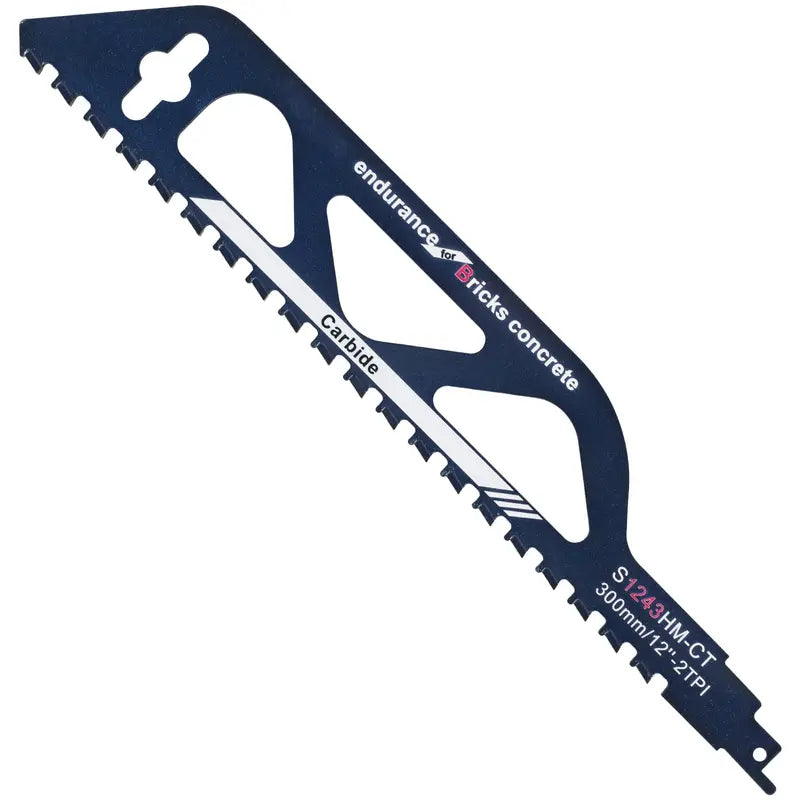
🧱🪚 12" Carbide Masonry Reciprocating Saw Blade – 2 TPI Heavy-Duty Brick & Block Cutting Blade 🔧
🧱🪚 12" Carbide Masonry Reciprocating Saw Blade – 2 TPI Heavy-Duty Brick & Block Cutting Blade 🔧






























BUNDLE & SAVE
Couldn't load pickup availability
-
Ordered
- - -
Order Ready
- - -
Delivered

🧱🪚 12" Carbide Masonry Reciprocating Saw Blade – 2 TPI Heavy-Duty Brick & Block Cutting Blade 🔧
Tough Masonry Jobs Need the Right Blade.
A 12-inch carbide-tooth reciprocating saw blade designed for coarse cuts in suitable bricks, masonry blocks, and porous concrete. Built for the jobs ordinary wood blades aren't made for.
Not Every Saw Blade Belongs in Brick.
Wood-cutting blades aren't designed for every abrasive material. When a project calls for shaping a suitable masonry block, blade type matters as much as the saw itself.
- Designed with coarse, carbide-tipped teeth
- Intended for compatible masonry applications
- A practical option for renovation and block-trimming jobs
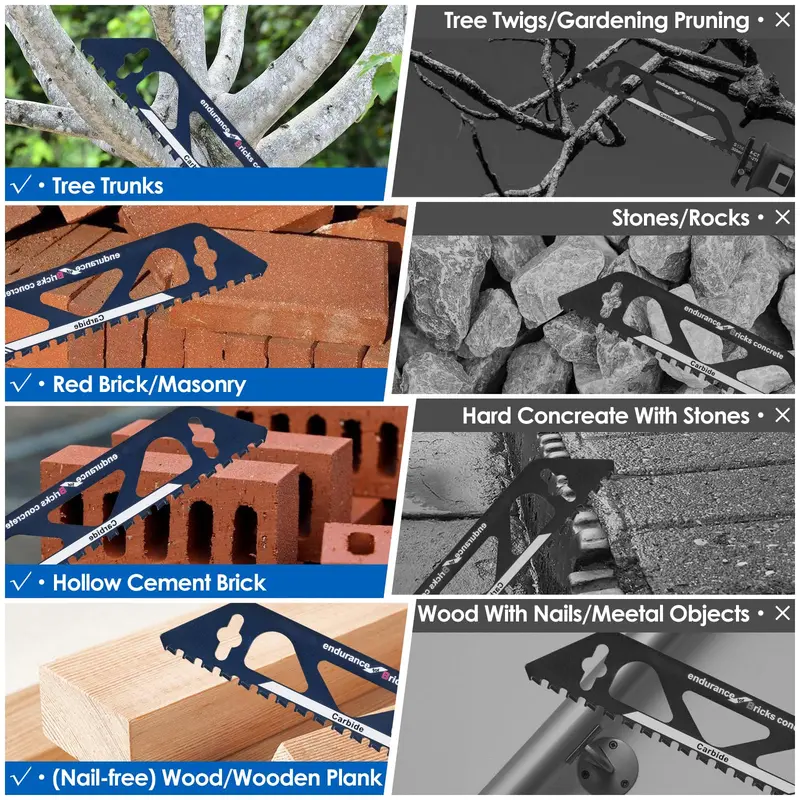
Know What It Can—and Can't—Cut.
According to the source product description, this blade is intended primarily for coarse cuts in selected masonry and porous building materials.
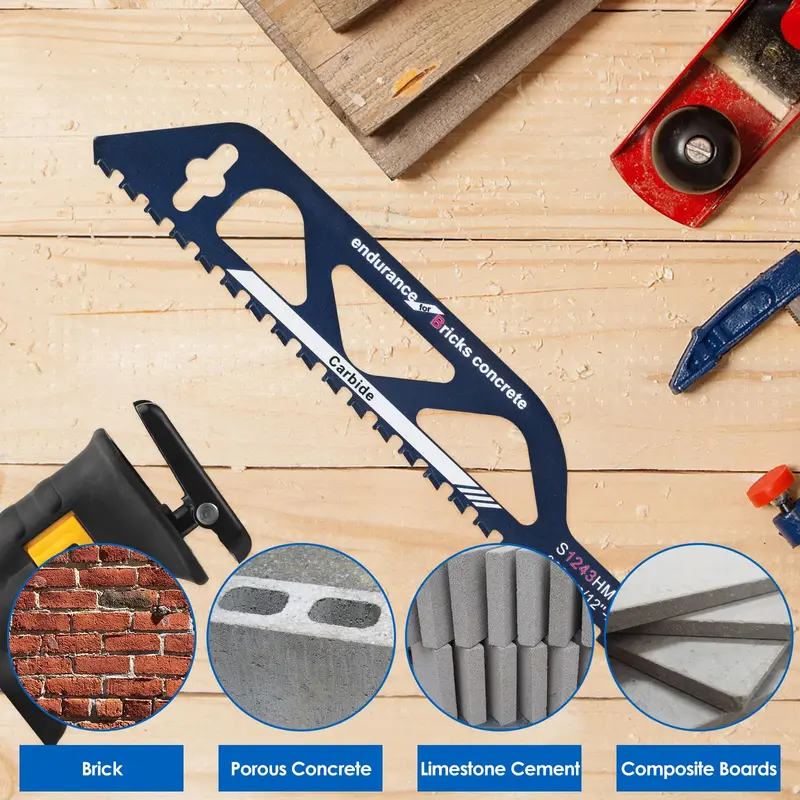
Red brick, hollow cement brick, porous concrete, selected limestone-cement materials, compatible composite boards, and nail-free wood.
Steel or solid metal, embedded nails or screws, natural stone, and hard reinforced concrete.
Coarse Teeth. Purposeful Design.
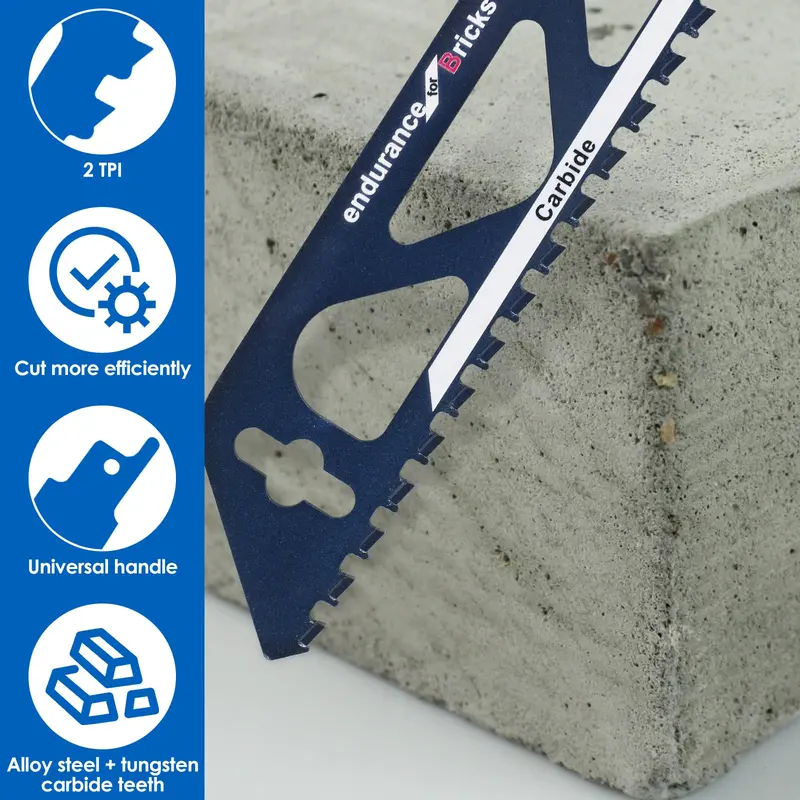
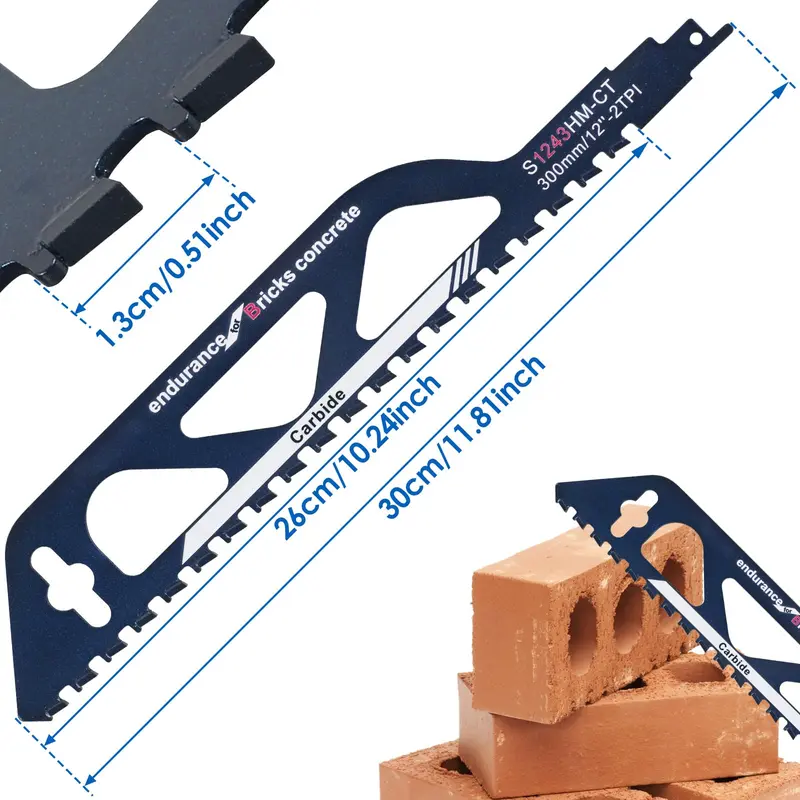
A 2 TPI tooth layout means two teeth per inch. The widely spaced tungsten-carbide teeth are intended for rough masonry cutting and debris clearance, rather than fine finishing cuts.
- Tungsten-carbide cutting teeth
- Coarse 2 TPI arrangement
- Alloy-steel blade body
Long-Reach 12-Inch Profile.
With an approximate overall length of 300 mm and a 260 mm cutting section, the blade offers added reach for suitable larger blocks. Always stay within your saw's supported cutting limits.
Shape and Trim Suitable Blocks.
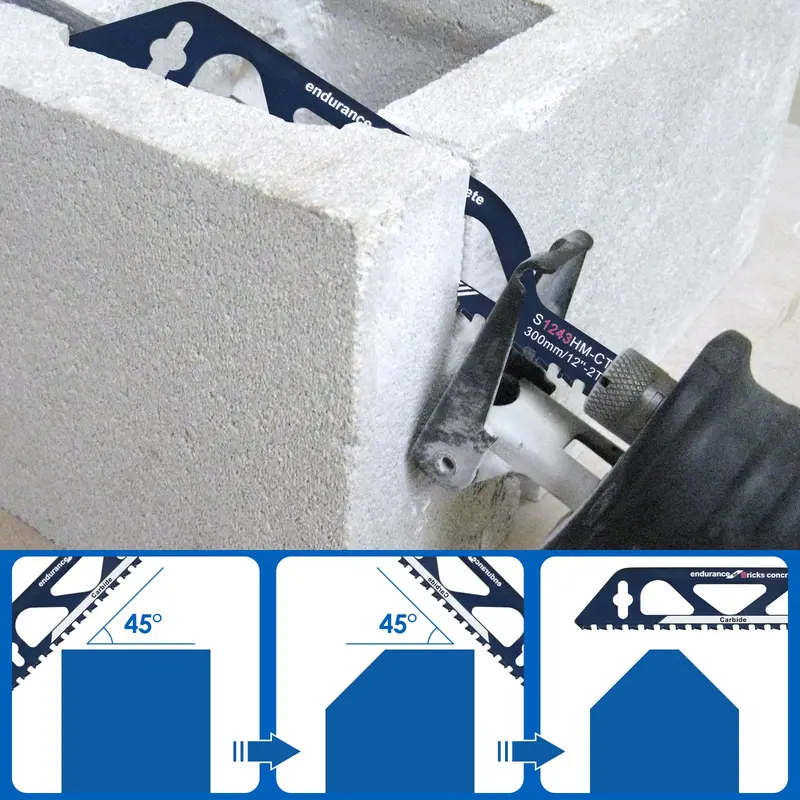
For controlled straight or angled trimming of compatible masonry materials during home renovations and appropriate construction tasks.
- Useful for selected block adjustments
- Suited to rough cuts, not precise finish work
- Support the material securely before cutting
Install Securely. Work Carefully.
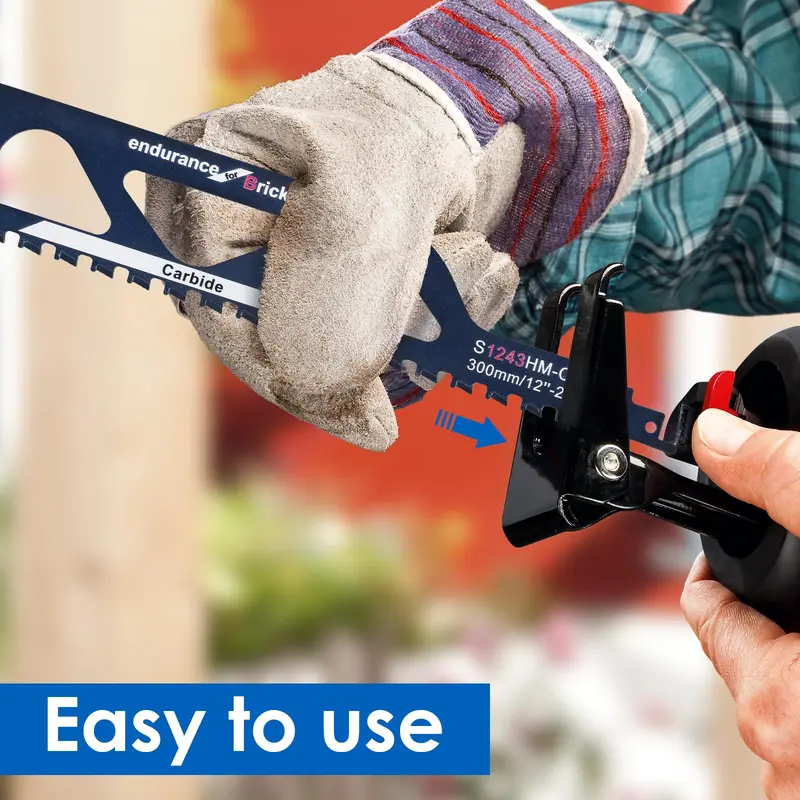
Unplug the saw or remove its battery before touching the blade clamp.
Use only a compatible saw and fully seat the blade shank as directed by its manufacturer.
Verify the lock, secure the workpiece, and follow the tool's operating and dust-control instructions.
Know Your Blade Before Ordering.
Questions Before Your Next Cut?
What materials is this blade intended for?
Selected brick, hollow cement brick, porous concrete, certain limestone-cement materials, compatible composite boards and nail-free wood, as described by the source listing. Always verify the material and saw's suitability.
Can it cut steel, nails or reinforced concrete?
Those are not recommended applications in the supplied listing. Choose a tool and blade specifically rated for those materials.
What does 2 TPI mean?
Two teeth per inch. This is a coarse tooth pattern intended for rough material removal rather than fine cutting.
Is it exactly 12 inches long?
The source image lists approximately 300 mm (11.81 in) overall and 260 mm (10.24 in) for the cutting section. “12-inch” is a nominal size description.
Will it fit every reciprocating saw?
Universal compatibility has not been confirmed. Compare the blade shank with your saw's clamp and manufacturer instructions before ordering.
How do I change it safely?
Disconnect the tool from power or remove the battery, follow the blade-clamp instructions, check the blade is locked and secure the material before cutting. Use appropriate PPE and dust controls.
Get Ready for Your Next Masonry Project.
Coarse carbide teeth, a long cutting profile and a masonry-focused design. Check your material and saw compatibility, then select the available blade option in the product purchase area.